

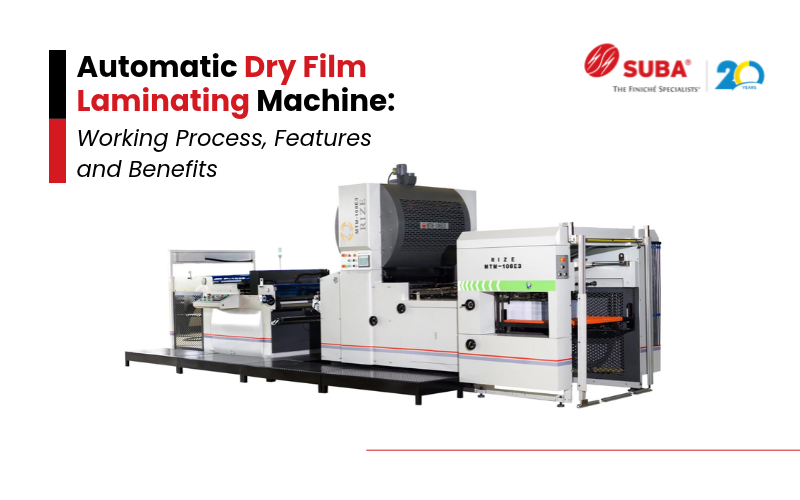
Automatic Dry Film Laminating Machine: Working Process, Features and Benefits
In printing and packaging production, lamination is often used to add a film layer to printed paper or board while achieving the required surface finish and functional properties. When production volumes increase, manually handling sheets, film and adhesive application can make consistency and production flow more difficult to maintain.
An automatic dry film laminating machine integrates sheet feeding, registration, surface preparation, adhesive coating, film lamination, drying, cutting and stacking into a controlled production process. This can help manufacturers reduce repetitive manual intervention and maintain a more consistent laminating workflow.
Suba Solutions offers automatic dry film laminating systems with different configurations, including flying-knife and hot-knife options, designed for printing and packaging applications.
What Is an Automatic Dry Film Laminating Machine?
An automatic dry film laminator bonds a film layer to printed paper or board using an adhesive-based laminating process. The film can provide the required surface characteristics for the finished product, depending on the film, adhesive, substrate and application.
The overall process can include:
Sheet Feeding → Registration → Powder Removal → Adhesive Coating → Film Lamination → Drying → Film Cutting → Stacking
By combining these operations in one production line, an automatic laminating machine can reduce repeated manual handling and provide controlled processing from sheet feeding through finished-sheet collection.
The actual machine configuration and performance depend on the selected model and the production requirements.
How Does a Dry Film Laminating Machine Work?
Understanding the working process helps manufacturers evaluate whether a particular machine configuration is suitable for their production requirements.
1. Automatic Sheet Feeding
The process begins with automatic sheet feeding. Servo-controlled feeding moves printed sheets into the laminating line at controlled intervals.
Non-stop feeding configurations can support continuous production by reducing interruptions during sheet feeding.
2. Sheet Registration
Before coating and lamination, the sheet needs to be correctly positioned.
A mechanical side-lay registration system helps align sheets as they enter the laminating process. Proper registration is important when film placement needs to remain consistent across a production run.
3. Powder Removal
Printed sheets can carry powder residue from the printing process. The machine includes an electrostatic powder-removal system to help clean the sheet surface before adhesive coating.
This prepares the substrate for the subsequent coating and lamination stages.
4. Adhesive Coating
The coating section applies adhesive to the sheet using a precision ceramic coating roller.
Controlled adhesive application is important because the amount and distribution of adhesive can influence the laminating process and finished product. Adhesive selection should be matched to the substrate, film and intended application.
5. Film Lamination
The film is introduced to the coated sheet and bonded through the laminating section.
The combination of controlled sheet feeding, registration, coating and film handling helps maintain a repeatable lamination process.
6. Heating and Drying
The machine incorporates electromagnetic heating and hot-air circulation as part of the heating and drying system.
Drying requirements depend on the adhesive, substrate, film and production conditions, so the appropriate operating settings should be established for the actual application.
7. Film Cutting
After lamination, the selected machine configuration cuts the film using either a flying-knife or hot-knife arrangement.
The cutting method should be selected according to the film, production requirements and machine configuration.
8. Automatic Stacking
The laminated sheets are collected through the automatic non-stop stacking system.
This allows finished sheets to be handled systematically after the laminating process and supports continuity in subsequent production operations.
Key Features of an Automatic Dry Film Laminator
Suba’s published machine information includes several features designed to support controlled laminating production.
| Machine feature | Production relevance |
|---|---|
| Servo-controlled high-speed feeding | Supports controlled sheet feeding |
| Non-stop feeding | Helps maintain production continuity |
| Mechanical side-lay registration | Supports sheet alignment |
| Electrostatic powder removal | Helps prepare the printed surface before coating |
| Precision ceramic coating rollers | Supports controlled adhesive coating |
| Electromagnetic heating | Provides controlled heating for the process |
| Hot-air circulation | Supports drying |
| Automatic non-stop stacking | Supports continuous finished-sheet collection |
| Flying-knife cutting | Provides a film-cutting option for the machine configuration |
| Hot-knife cutting | Provides an alternative film-cutting arrangement |
The availability and exact specification of each feature depend on the selected machine configuration.
Flying Knife vs Hot Knife: Which Cutting Method Should You Choose?
Film cutting is an important part of dry film lamination, particularly when production speed and film handling are important considerations.
Flying Knife
The flying-knife configuration is designed for quick film cutting. Suba’s published information states that the flying knife uses low power, with the specified configuration listing power consumption as low as 0.4 kW.
It can be considered when quick film cutting and the specific requirements of the production line make this configuration suitable.
Hot Knife
The hot-knife option uses a heated blade for film cutting. Suba’s published information states that the hot-knife blade can reach 400°C within 3 seconds in the specified configuration.
This configuration is intended for applications where heated film cutting is appropriate.
Which One Is Right for Your Production?
The choice between flying knife and hot knife should not be made only by comparing cutting speed.
Consider:
- Film type
- Film thickness
- Sheet size
- Required production speed
- Cutting requirements
- Finished-product specifications
- Machine configuration
Discussing the actual film and product requirements with the machinery manufacturer can help determine the more appropriate cutting arrangement.
Benefits of Automatic Dry Film Lamination
More Controlled Film Application
Automatic feeding, registration and film handling can support repeatable film application across production runs.
Controlled Adhesive Coating
The precision coating system provides controlled adhesive application, which can help maintain the required coating process for the selected substrate and film.
Reduced Repetitive Manual Handling
Automated feeding, lamination, cutting and stacking reduce the amount of repetitive handling required throughout the process.
Production Continuity
Non-stop feeding and automatic non-stop stacking can support continuous operation and reduce interruptions associated with manual sheet handling.
Controlled Sheet Registration
Mechanical side-lay registration helps position sheets before the laminating stage, supporting consistent processing.
Surface Preparation Before Coating
Electrostatic powder removal helps remove powder from the printed sheet surface before adhesive application.
Flexible Film-Cutting Options
Flying-knife and hot-knife configurations provide different approaches to film cutting, allowing the machine configuration to be matched to the application.
Actual production results will depend on the substrate, film, adhesive, machine configuration, operating conditions and job requirements.
Applications of Dry Film Laminating Machines
Dry film lamination can be used for printed paper and board products where a laminated surface is required.
Folding Carton Packaging
Printed carton sheets may be laminated when the packaging specification calls for a particular surface finish or functional characteristic.
Printed Paper Products
Commercially printed paper products can use film lamination where the selected film and adhesive are compatible with the substrate and finished-product requirements.
Packaging Applications
Laminated paper and board can be used in different packaging applications where surface properties and product presentation are important.
Premium Printed Packaging
Selected packaging products may use film lamination as part of their overall surface and presentation requirements.
The appropriate film and adhesive combination should always be selected according to the substrate, printing process and intended finished product.
Published Technical Specifications
Suba’s published 108E and 145E specifications provide the following reference range:
| Specification | 108E | 145E |
|---|---|---|
| Maximum laminating width | 1080 mm | 1080 mm |
| Maximum sheet size | 1080 × 1080 mm | 1080 × 1450 mm |
| Minimum sheet size | 350 × 350 mm | 350 × 350 mm |
| Paper thickness | 100–500 GSM | 100–500 GSM |
| Film thickness | 6–25 microns | 6–25 microns |
| Machine speed | 10–80 m/min | 10–80 m/min |
| Connected power | 68 kW | 68 kW |
| Production usage | 30 kW | 30 kW |
These figures are published machine specifications and should be treated as a reference when evaluating the equipment. Actual production performance can vary according to substrate, film, adhesive, sheet dimensions, job characteristics and operating conditions.
What Should You Consider Before Buying an Automatic Dry Film Laminating Machine?
Choosing a laminator based only on its maximum speed may not result in the best match for your production requirements.
Consider the following factors before selecting a machine:
Sheet Size
Determine the minimum and maximum sheet dimensions used in your production.
Paper or Board GSM
Check whether the substrate falls within the machine’s specified working range.
Film Thickness
Identify the film thickness required for your products and confirm that it falls within the machine’s supported range.
Film Type
Different applications may require different film characteristics. The film should be compatible with the substrate, adhesive and finished-product requirements.
Adhesive System
Consider the adhesive type, coating requirements and drying characteristics of the application.
Required Production Speed
Define the production output you actually need rather than selecting equipment based solely on its maximum rated speed.
Cutting Method
Determine whether a flying-knife or hot-knife configuration is more appropriate for your film and production requirements.
Powder Removal
If the printed sheets carry powder residue, consider the suitability of an integrated powder-removal system.
Drying Requirements
The drying process should be evaluated according to the adhesive, film, substrate and production conditions.
Stacking Requirements
Consider how laminated sheets need to be collected and transferred to the next production stage.
Floor Space and Power
Available installation space, connected power and overall production-floor arrangement should also be considered before finalizing the machine.
Providing the manufacturer with actual sheet samples, substrate details and film specifications can make machine selection more precise.
Suba Solutions Automatic Dry Film Laminating Machines
Suba Solutions offers automatic dry film laminating machines designed around automated feeding, registration, adhesive coating, film lamination, drying, cutting and stacking.
The company’s published information includes 108E and 145E specifications, along with MTM-108E3 and MTM-108E4 configurations. Flying-knife and hot-knife options are available according to the selected configuration.
The appropriate machine should be evaluated according to:
- Sheet dimensions
- Paper or board GSM
- Film type and thickness
- Adhesive requirements
- Required production speed
- Cutting method
- Finished-product requirements
- Available production space
This approach helps manufacturers select a laminating system based on their actual production process rather than relying on a single machine specification.
Frequently Asked Questions
What is an automatic dry film laminating machine?
An automatic dry film laminating machine applies an adhesive and bonds a film layer to printed paper or board through a controlled feeding, coating, lamination, drying, cutting and stacking process.
How does a dry film laminating machine work?
The machine feeds and registers the sheets, removes powder, applies adhesive, laminates the film, supports drying, cuts the film and automatically stacks the finished sheets.
What film thickness can the Suba dry film laminator handle?
The published 108E and 145E specifications list a film thickness range of 6–25 microns.
What is the difference between flying knife and hot knife lamination?
The flying knife uses a mechanical cutting arrangement for quick film cutting, while the hot knife uses a heated blade; the appropriate option depends on the film, application and machine configuration.
Can the machine operate continuously?
Suba’s published configuration includes non-stop feeding and automatic non-stop stacking, supporting continuous production flow.
What information should I provide when enquiring about a dry film laminating machine?
Share your sheet size, paper or board GSM, film type and thickness, adhesive requirement, required production speed, preferred cutting method and production target.
Conclusion
An automatic dry film laminating machine brings feeding, sheet registration, powder removal, adhesive coating, film application, drying, cutting and stacking into a controlled production process.
For printing and packaging manufacturers, the right laminator should be selected according to the actual combination of sheet dimensions, substrate GSM, film specification, adhesive system, cutting method and production target.
Rather than choosing a machine only by its maximum speed, evaluating the complete laminating process can help ensure that the equipment is better suited to the products and materials being produced.
Looking for an Automatic Dry Film Laminating Machine?
Share your sheet size, paper or board GSM, film type and thickness, adhesive requirement, required production speed, cutting preference and production target with Suba Solutions.
If available, providing a product sample or production specification can also help the team understand your application and identify a suitable laminating configuration.
About Suba Solutions
Suba Solutions Private Limited provides printing and packaging machinery and related solutions for the folding carton, flexible packaging and corrugated box industries, with equipment covering laminating, die cutting, stripping and blanking, window patching, folding and gluing, carton forming and other packaging processes.